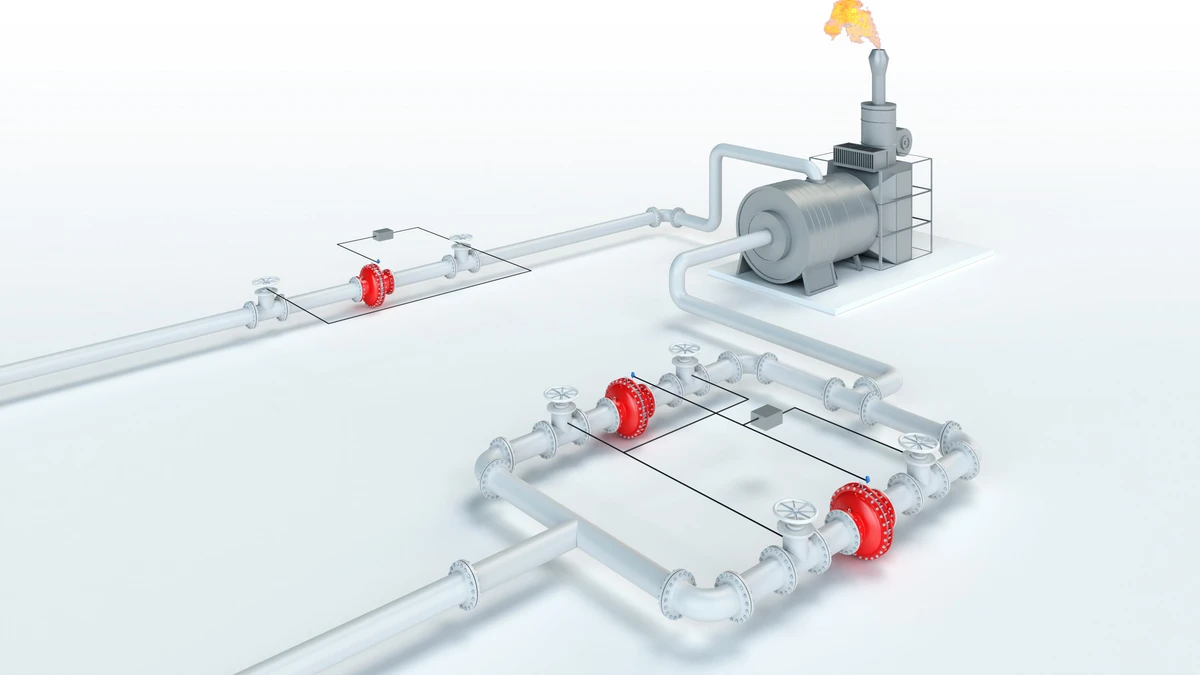
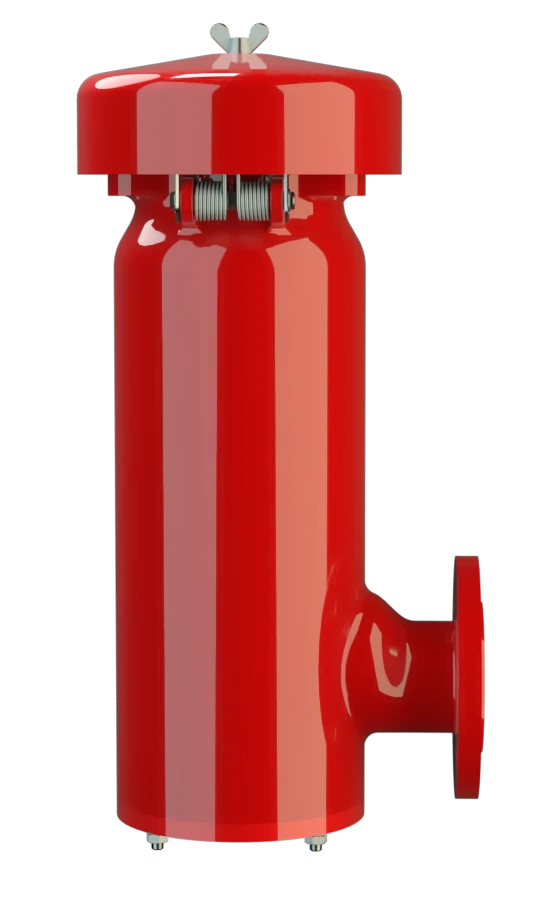
PV/EB

Pressure/Vacuum Relief Valve deflagration- and endurance burning-proof
Features

10% Technology
for Minimum Pressure Increase up to Full Lift
Extreme Tightness
Resulting in Lowest Possible Product Losses and Reduced Environmental Pollution
Optimum Pressure Maintenance
Based on 10% Technology, Set Pressure Is Close to Opening Pressure for Optimum Pressure Maintenance in the System as Compared to Conventional 40% or 100% Technology
More Efficient Opening and Closing
Valve Opens Later and Closes Earlier Than Conventional Valves
Guided Valve Pallet
Valve Pallet Is Guided Inside the Housing to Protect Against Harsh Weather Conditions
Protective System According to ATEX
can Be Used as a Protective System in Areas With Potentially Explosive Atmosphere in Accordance With ATEX
Use as Detonation-Proof Check Valve
can Be Used as a Detonation-Proof Valve in Suction Lines of Storage Tanks
Lifting Device
Available in a Special Design With Lifting Device (for Ships)
Modular Design
Allows Replacement and Cleaning of Single FLAMEFILTER®
Intergrated Flame Arrester
Integrated PROTEGO® Flame Arrester Unit Saves Space and Weight and Reduces Costs
Function and Description

Combined Pressure and Vacuum Relief Valve

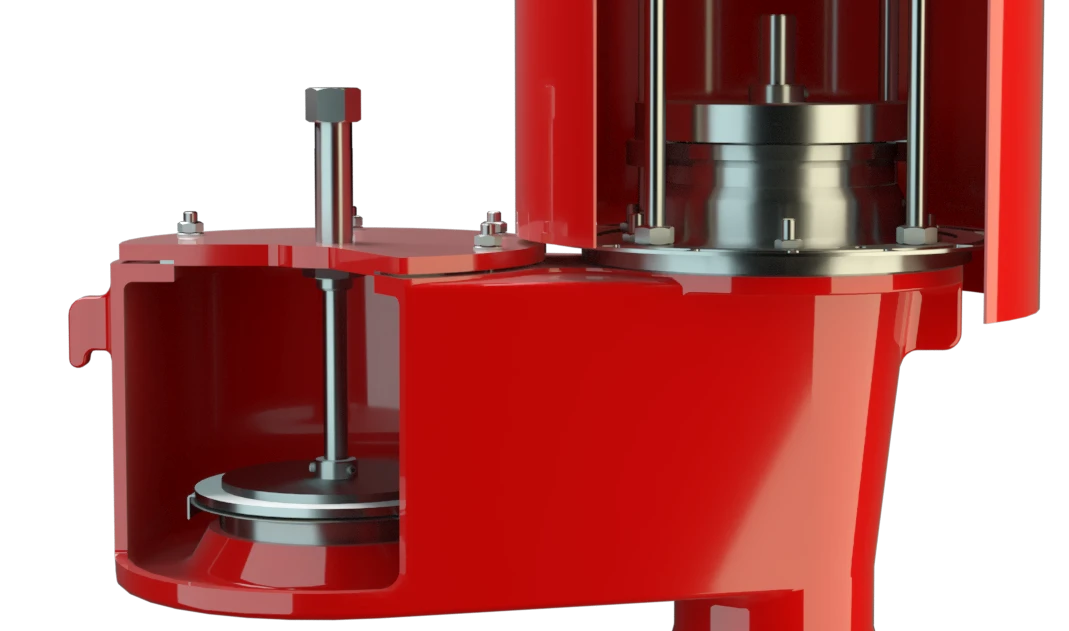
The Pressure/vacuum relief valve Pressure/vacuum relief valve is an umbrella term that includes pressure or vacuum relief valve as well as pressure and vacuum relief valve. Atmospheric Deflagration Deflagration Explosion propagating at subsonic velocity (EN 1127-1:1997). -Proof and Endurance-Burning-Proof PV/EB Type PROTEGO® valve is a highly developed combined pressure/vacuum relief valve for high flow capacities with an integrated Flame Arrester Flame arrester Device fitted to the opening of an enclosure, or to the connecting pipe work of a system of enclosures, and whose intended function is to allow flow but prevent the transmission of a flame. Unit. It is primarily used as a device Device A device is a pipe component that influences the media flow by opening, closing, or partially shutting off the flow channel or by dividing or mixing the media flow. for flame transmission proof in-breathing and out-breathing on tanks, containers, and process equipment Equipment Machines, appliances, fixed or mobile devices, control parts and accessories, and warning and prevention systems, whether separate or combined, intended for the generation, transfer, storage, measurement, control, and conversion of energy, and for the processing of materials, which have their own potential source of ignition and may cause an explosion. . The valve offers reliable protection against overpressure Overpressure Overpressure refers to an increase in pressure in a system or vessel above the normal operating pressure. and vacuum Vacuum Vacuum is the pressure in an enclosed space that is lower than the ambient pressure. , prevents the in-breathing of air and product Product Includes equipment, protective systems, devices, components and combinations of these. losses almost up to the set pressure Set pressure Set pressure is the gauge pressure at the device inlet at which the relief device is set to start opening under service conditions. , and protects against atmospheric deflagration and endurance burning Endurance burning Stabilized burning for an unlimited time. if stabilized burning Stabilized burning Steady burning of a flame stabilized at, or close to the flame arrester element. occurs.

10%-Technology

The PROTEGO® Flame Arrester Unit is designed to achieve minimum pressure drop with maximum safety. The PROTEGO® PV/EB valve is available for substances from explosion Explosion Abrupt oxidation or decomposition reaction producing an increase in temperature, pressure, or in both simultaneously. group IIA (NEC group D MESG > 0.9 mm). When the set pressure is reached, the valve starts to open and reaches full lift Lift Lift is the actual travel of the valve pallet from the main valve out of the closed position. within 10% overpressure. This unique 10% technology enables a set pressure that is only 10% below the maximum allowable working pressure (MAWP) or maximum allowable working vacuum (MAWV) of the tank. After years of development, this typical opening characteristic of a safety relief valve is now also available for the low pressure range.

Advanced Manufacturing Technology

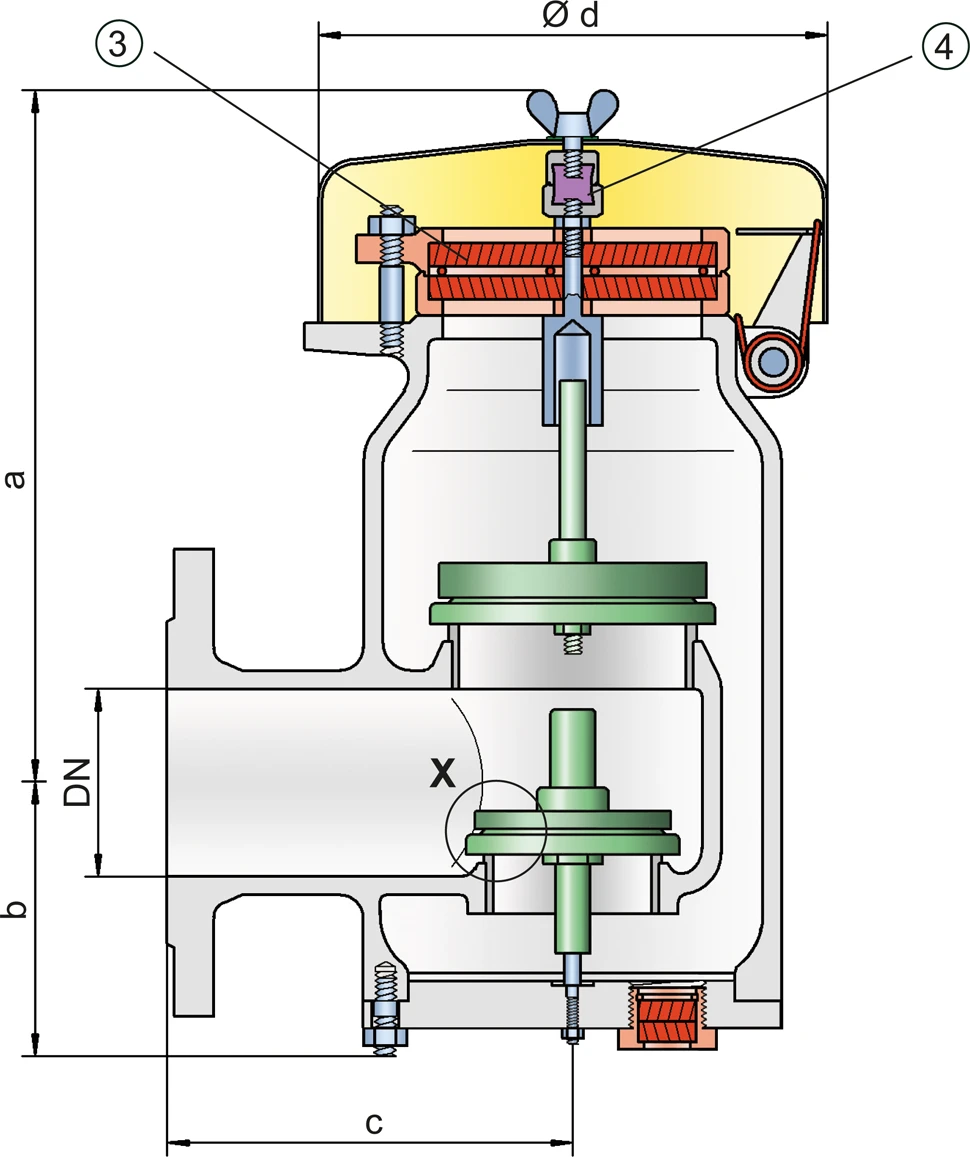
The tank pressure Tank pressure Tank pressure is the pressure within a tank. is maintained up to the set pressure with a tightness that is above the normal standards due to our stateof- the-art manufacturing technology. This feature is ensured by the valve seats made of high quality stainless steel and with individually lapped valve pallets (1), or with an air cushion seal Seal A seal prevents or limits unwanted transfer of product from one container to another. Seal is used as superordinate term for all types of sealing elements. (2), in conjunction with high quality FEP diaphragm Diaphragm A diaphragm is a thin layer of material, which has a large surface area. . The valve pallets are also available with a PTFE seal to prevent the valve pallets from sticking when sticky substances are used and to enable the use of corrosive fluids. After the overpressure is released, the valve re-seats and provides a tight seal.

Main Component – PROTEGO® Flame Arrester Unit

If the set pressure is exceeded, explosive gas/product vapor/ air mixtures are released into the atmosphere. If this mixture ignites, the integrated PROTEGO® Flame Arrester Unit (3) prevents flame transmission into the tank. If additional mixture continues to flow and stabilized burning occurs, the integrated PROTEGO® Flame Arrester Unit prevents flashback Flashback Phenomenon occurring in a flammable mixture of air and gas when the local velocity of the combustible mixture becomes less than the flame velocity, causing the flame to travel back to the point of mixture. as a result of endurance burning. The valve is protected and also fulfils its function under these severe conditions. The spring Spring A spring is a spiral of wire which returns to its original shape after it is pressed or pulled. -loaded weather hood Weather hood A weather hood is a cover to protect the internal components of a device from environmental influences. opens as soon as the melting element Melting element The melting element is a component that consists of a housing with a lower and upper part. (4) melts.

Many Individual Certifications

The valve can be used at an operating temperature Operating temperature Temperature reached when the equipment is operating under design conditions. of up to +60°C / 140°F and meets the requirements of European Tank Design Standard EN 14015 (Appendix L) and ISO 28300 (API 2000). EU conformity according to the currently valid ATEX directive. Approvals according to other national/international regulations on request.
Product Data

Dimensions

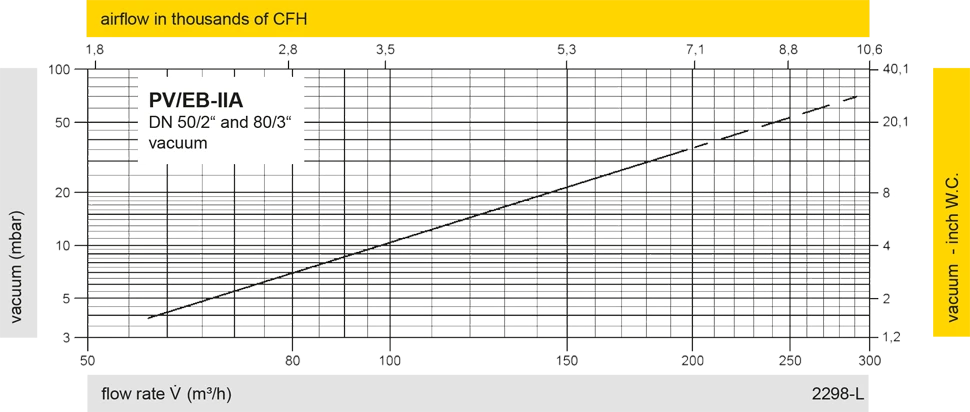
To select the nominal size Nominal size The nominal size is an alphanumeric designation of size for components in a piping system, used for reference purposes, comprising the letters DN followed by a dimensionless integer that is indirectly related to the physical size of the bore or outside diameter of the connections, expessed in millimeters. (DN), please use the flow capacity chart on the following page

DN 50 / 2" 50 / 2" 80 / 3" 80 / 3"
Set pressure≤ +60 mbar> +60 mbar≤ +60 mbar> +60 mbar
Set pressure≤ +24.1 inch W.C.> +24.1 inch W.C.≤ +24.1 inch W.C.> +24.1 inch W.C.
a308 / 12.13443 / 17.44308 / 12.13443 / 17.44
b108 / 4.25108 / 4.25108 / 4.25108 / 4.25
c165 / 6.50165 / 6.50167 / 6.57167 / 6.57
d218 / 8.58218 / 8.58218 / 8.58218 / 8.58

Dimensions in mm / inches

Selection of explosion group

MESGExpl. Gr. (IEC / CEN)Gas Group (NEC)
> 0,90 mmIIAD

Special approvals upon request

Material selection for housing

Special materials upon request

Material combinations of flame arrester unit

Special materials upon request

Material selection for pressure valve pallet

Design ABCD
Pressure range [mbar]
[inch W.C.]
+2.0 up to +3.5
+0.8 up to +1.4
>+3.5 up to +14
>+1.4 up to +5.6
>+14 up to +210
>+5.6 up to +84
>+35 up to +210
>+14 up to +84
Valve pallet Valve pallet Valve pallet is the generic term for the assembly that rests on the valve seat. AluminiumStainless SteelStainless SteelStainless Steel
SealingFEPFEPMetal to MetalPTFE

Special materials and higher pressure settings upon request

Material selection for vacuum valve pallet

Design ABCD
Vacuum range [mbar]
[inch W.C.]
-3.5 up to -5.0
-1.4 up to -2.0
<-5.0 up to -14
<-2.0 up to -5.6
<-14 up to -35
<-5.6 up to -14
<-14 up to -35
<-5.6 up to -14
Valve palletAluminiumStainless SteelStainless SteelStainless Steel
SealingFEPFEPMetal to MetalPTFE

Flange connection type

EN 1092-1; Form B1
ASME B16.5 CL 150 R.F.

other types upon request

Flow Capacity Chart
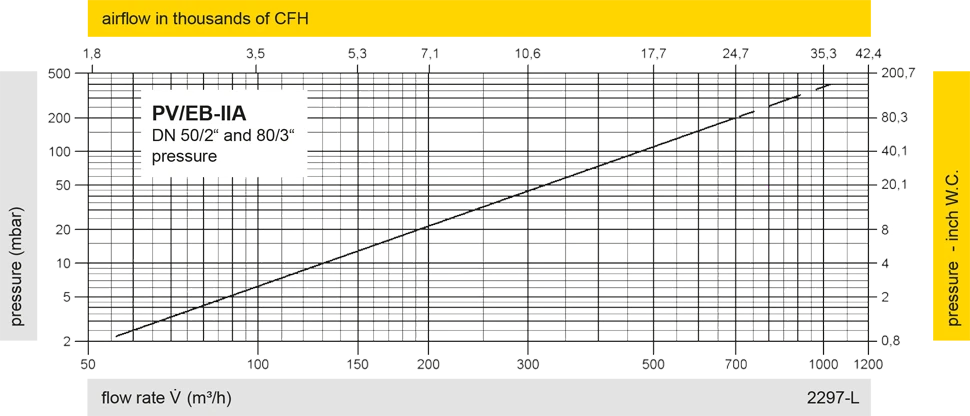
The flow capacity charts have been determined with a calibrated and TÜV certified flow capacity test rig. Volume flow V in (m³/h) and CFH refer to the standard reference conditions of air ISO 6358 (20°C, 1bar). For conversion to other densities and temperatures refer to Sec. 1: “Technical Fundamentals”.

Detail X

Detail X
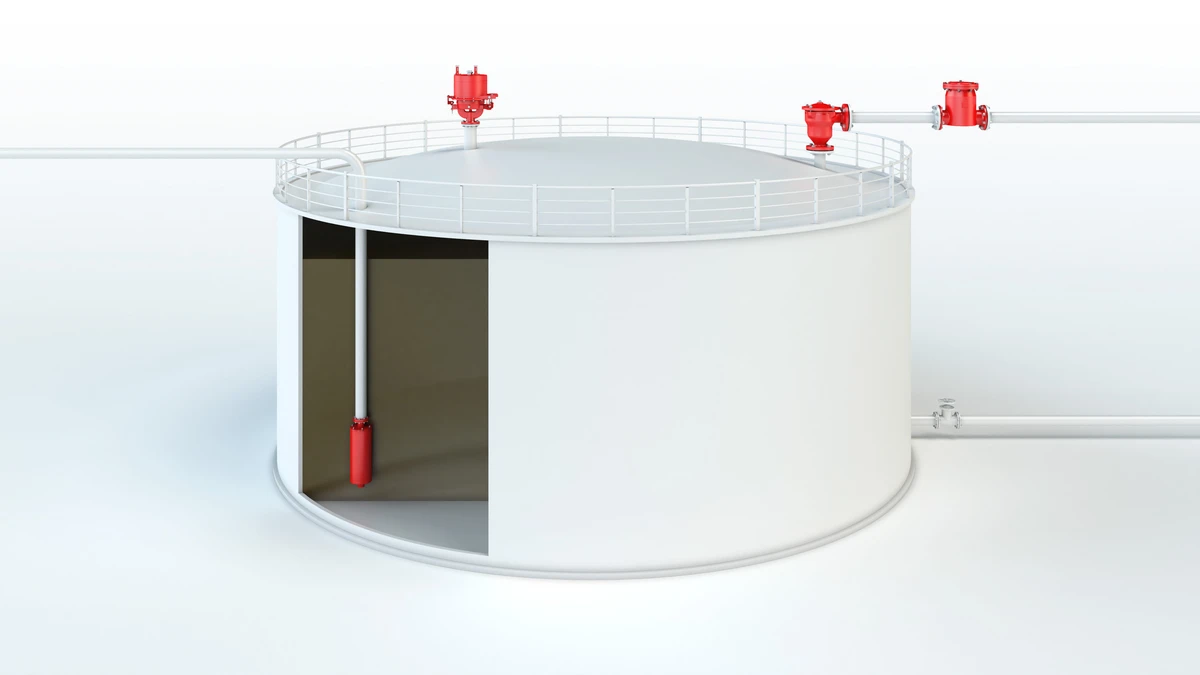
Applications

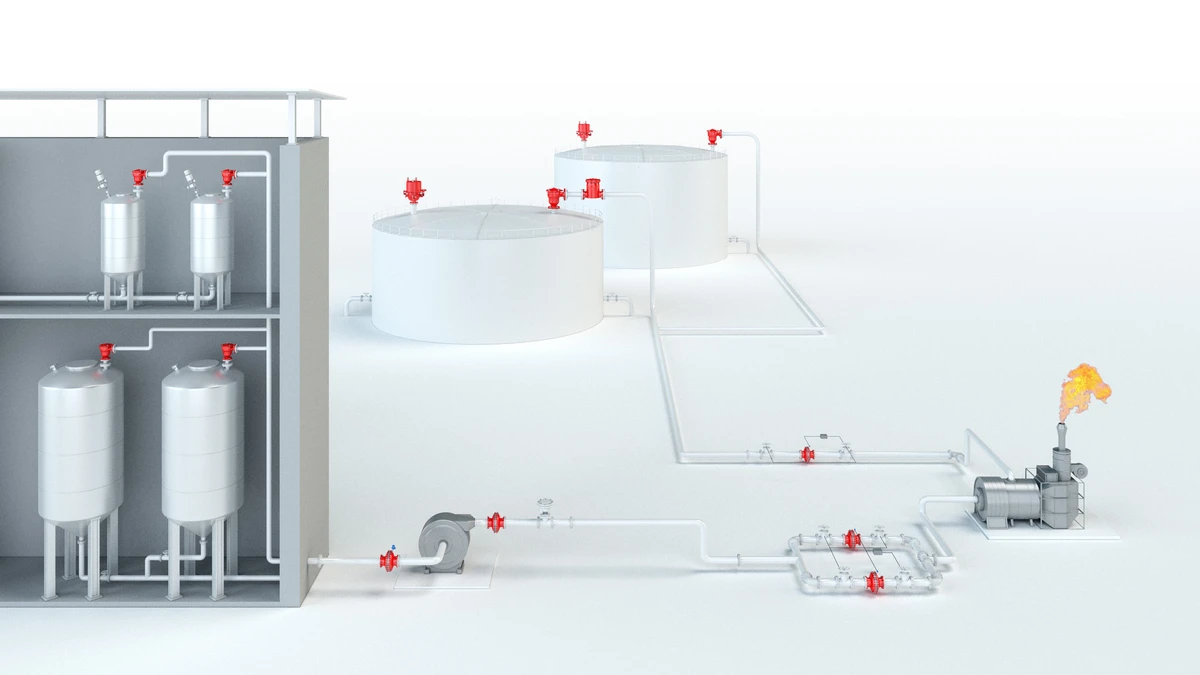
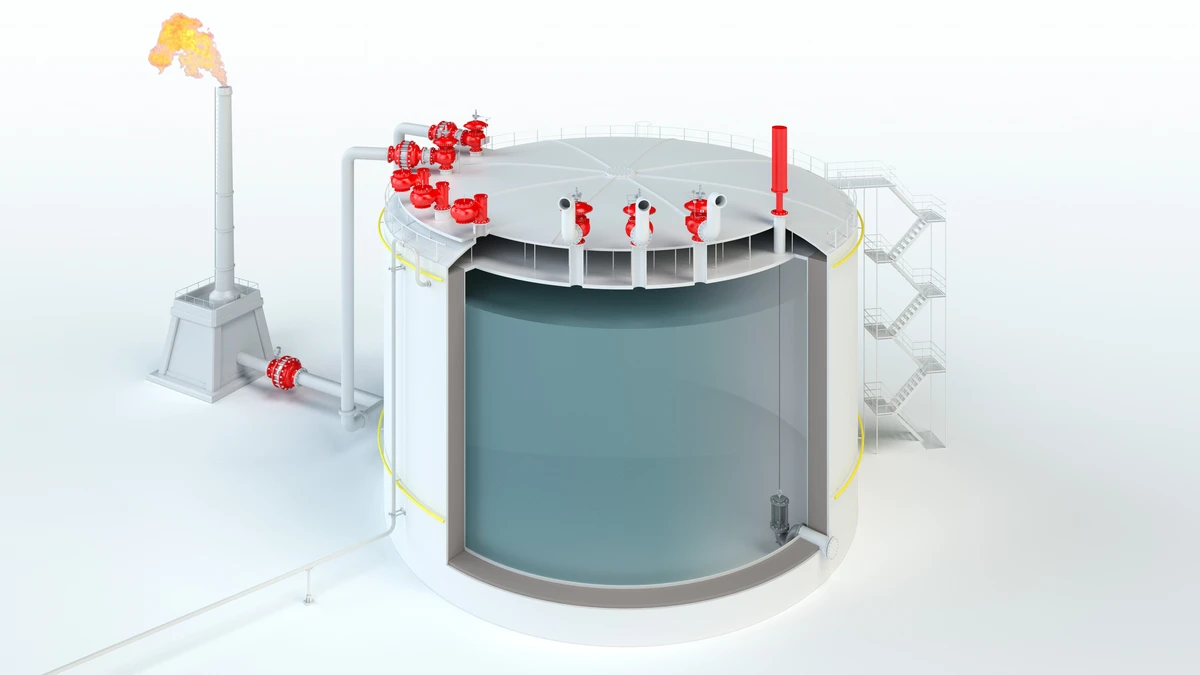
Tank Storage

Chemical and Pharmaceutical Processing Facilities

Renewable Energy

Vapor Treatment

Contact CSR Department 

Picture of Auris-Nadine Hillen
Auris-Nadine Hillen

CSR Department

+49 (0)5307 809 108