Laboratoire d'essais d'explosion
Dans l'industrie moderne, la sécurité des procédés revêt une importance capitale, en particulier lorsqu'il s'agit de substances et de mélanges potentiellement dangereux.
Pour réduire les risques au minimum et garantir une sécurité maximale, il est essentiel de connaître précisément les paramètres liés à la sécurité de ces substances.


Réduction des risques
Les paramètres indiqués dans la littérature sont généralement basés sur des conditions standard, qui peuvent différer considérablement des conditions réelles de fonctionnement et doivent donc être examinés d'un œil critique sous l'angle de la sécurité.
Notre laboratoire d'essais PROTEGO® offre la possibilité de déterminer divers paramètres dans des conditions non atmosphériques, ce qui permet d'identifier l'influence de vos conditions de processus spécifiques (pression, température, agents oxydants, gaz inertes, etc.).
L'étude de la pression d'explosion, des limites d'inflammabilité, de l'augmentation maximale de la pression d'explosion, de la concentration limite en oxygène ou de l'écart de sécurité expérimental maximal dans des conditions d'exploitation réalistes fournit des données précises qui contribuent à minimiser les risques tout en évitant les coûts liés à une conception trop sophistiquée.
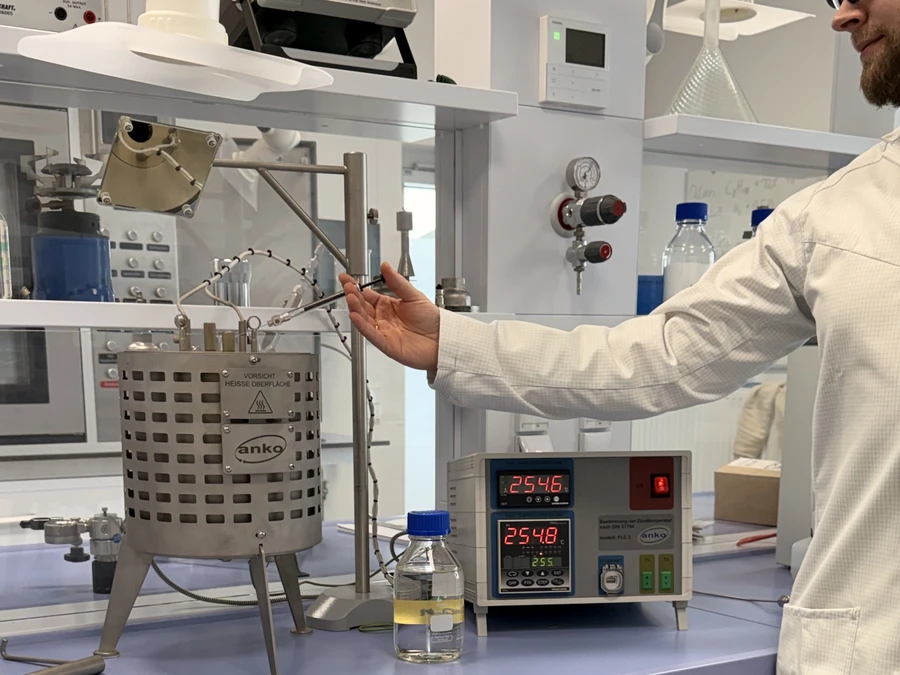
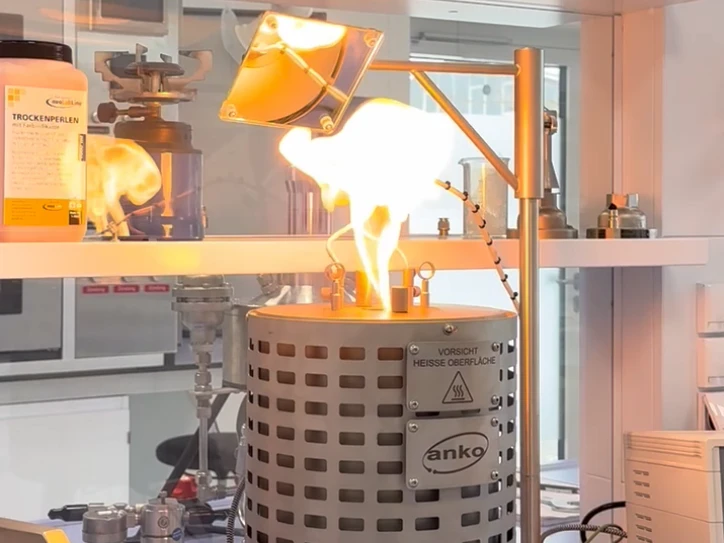
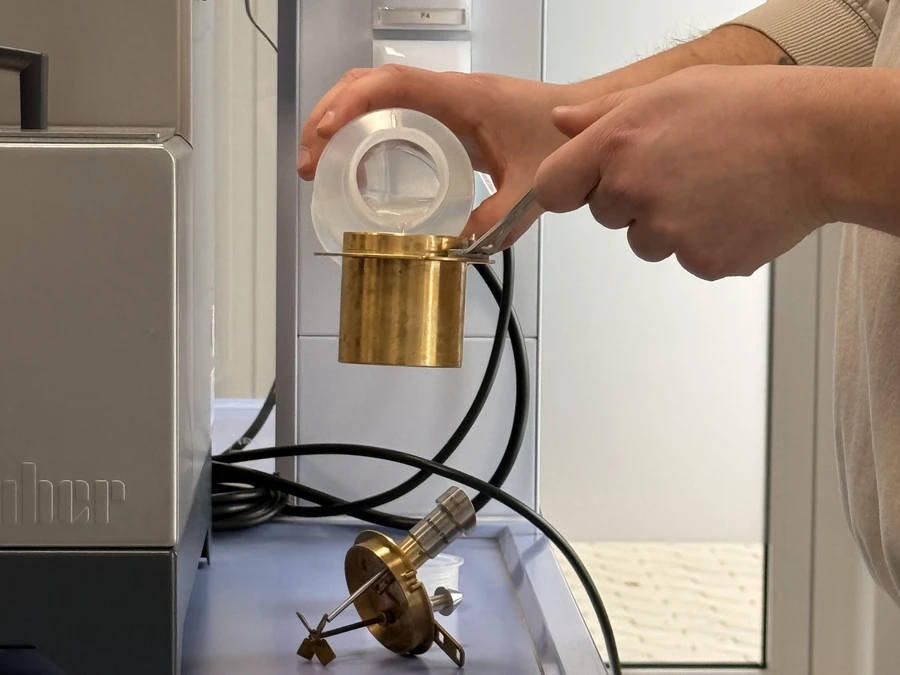
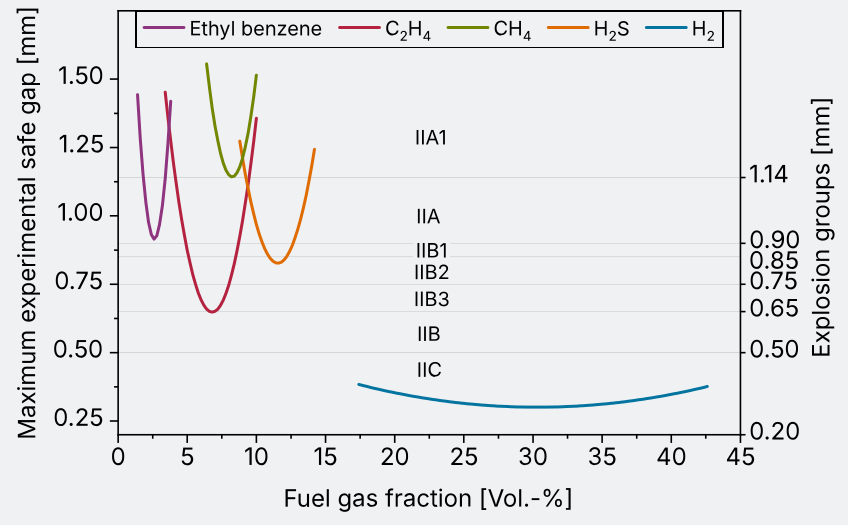
Interstice Expérimental Maximal de Sécurité (MESG) (groupe d'explosion)
L'évaluation de la capacité de pénétration de l'inflammation d'une substance est effectuée conformément à la norme EN ISO/IEC 80079-20-1 à l'aide d'un appareil de mesure MESG ; la substance est ensuite classée dans l'un des groupes d'explosivité IIA1, IIA, IIB1, IIB2, IIB3, IIB ou IIC sur la base des résultats expérimentaux.

Quantification des conditions qui modifient les groupes d'explosion
La classification d'explosivité d'une substance sert à évaluer l'adéquation des arrêtes-flammes ou des appareils dotés d'une protection de type « enveloppe antidéflagrante » (Ex d) pour la substance en question. Outre la détermination du MESG des substances pures, le laboratoire d'essais PROTEGO® offre également la possibilité de quantifier l'influence de la température, de la pression, des gaz inertes ou des agents oxydants. Parmi les domaines d'application possibles, on peut citer, par exemple, la détermination de la teneur en gaz inerte nécessaire pour faire passer le groupe d'explosivité d'un mélange de substances spécifique de IIC à IIA, permettant ainsi une conception d'installation plus économique.

Limites inférieure et supérieure d'inflammabilité
Diverses mesures relevant de la protection antidéflagrante peuvent être mises en œuvre pour empêcher la formation d'atmosphères explosives au sein d'une installation. L'une des plus importantes consiste à veiller à ce que les limites d'inflammabilité d'une substance ou d'un mélange ne soient ni dépassées ni sous-dépassées.
Ces paramètres peuvent être déterminés à pression atmosphérique conformément à la norme EN 1839:2017-04, en utilisant la méthode du tube ou de la bombe ; toutefois, seule la méthode de la bombe, conformément à la norme EN 17624:2022, est applicable aux pressions élevées. Dans cette méthode, le mélange carburant-air est introduit dans un autoclave à pression d'explosion où il est enflammé au moyen d'une décharge haute tension, d'un fil explosif ou d'un allumage par étincelle glissante.

Mesure de la pression dynamique pour la sécurité de l'allumage
La mesure de la pression dynamique dans la paroi permet de déterminer si le critère d'inflammation du mélange (augmentation de pression de 5 % ou 2 % par rapport à la pression initiale) est rempli ou si la valeur est inférieure à la limite. Le mélange peut être obtenu soit par un procédé de pression partielle, soit par évaporation complète des flux liquides suivie d'une homogénéisation avec le flux de gaz ou d'air.
Lorsqu'on applique les limites d'explosivité pour garantir la sécurité du contrôle des procédés, il convient de noter que les paramètres déterminés en laboratoire ne sont pas toujours directement transposables au procédé. Cela peut s'expliquer par des conditions environnementales différentes, notamment en matière de température et de pression, qui peuvent avoir une influence déterminante sur ces paramètres.
Point d'éclair
Le « point d'éclair » permet de déterminer si, et dans quelles conditions environnementales, une atmosphère inflammable se forme au-dessus d'un liquide. Ce paramètre de sécurité est l'un des plus anciens ; il sert de référence pour l'évaluation des risques d'explosion depuis le XIXe siècle.
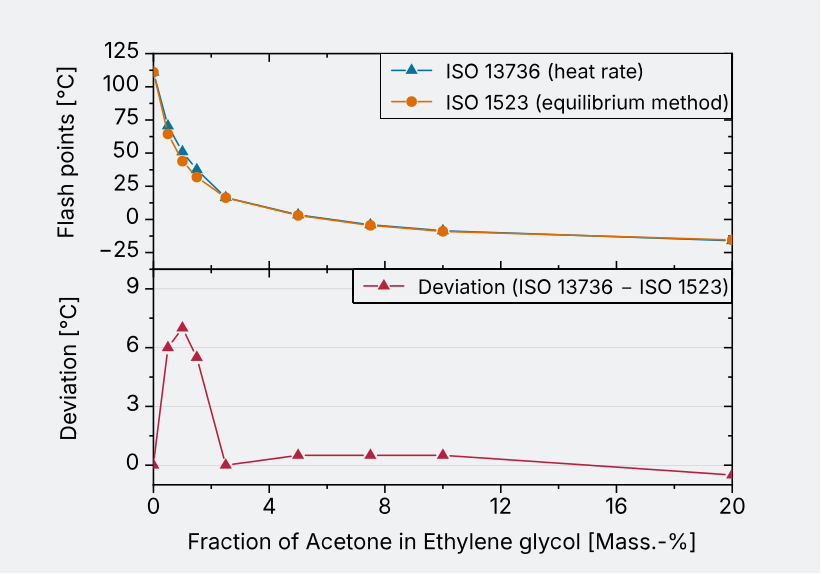
Pour déterminer le point d'éclair, un échantillon liquide d'un volume défini est chauffé selon un gradient de température constant et soumis, à intervalles réguliers, à une source d'inflammation appropriée afin de vérifier la possibilité d'inflammation. Le type de source d'inflammation, le volume et le gradient de température sont définis par la norme utilisée, ce qui signifie que les valeurs obtenues peuvent varier dans une certaine fourchette.
Il est important de vérifier si la norme utilisée s'applique bien à la substance ou au mélange de substances testé afin d'adopter une approche prudente en matière de sécurité. L'exemple des mélanges d'acétone et d'éthylène glycol présenté dans la figure montre que la norme ISO 13736 s'écarte considérablement vers le côté dangereux par rapport à la norme ISO 1523 pour les mélanges contenant de faibles proportions de composants à bas point d'ébullition ou d'impuretés.
Concentration limite en oxygène
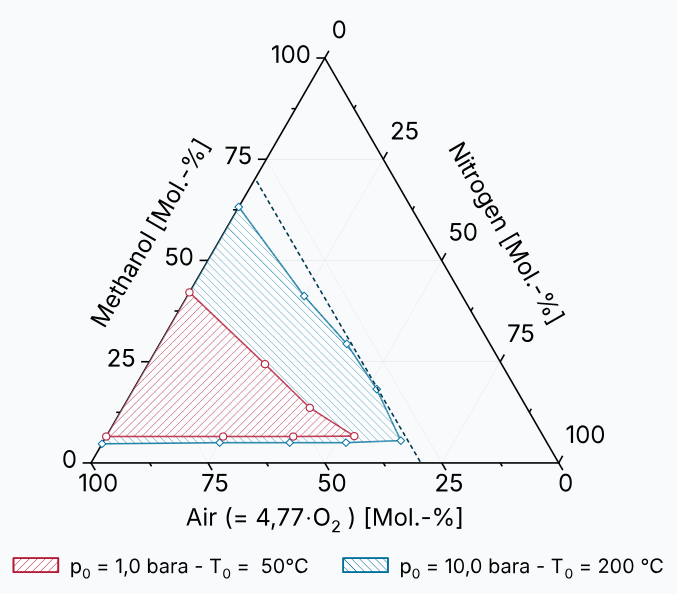
Outre les limites d'explosivité déjà mentionnées, un autre paramètre important pour la protection antidéflagrante est ce qu'on appelle la concentration limite en oxygène. Il s'agit de la concentration maximale en oxygène dans un mélange combustible-gaz inerte-air à laquelle aucune explosion ne peut se produire.
La limite d'explosivité (LOC) peut être déterminée conformément à la norme EN 1839:2017-04 en utilisant la méthode du tube ou de la bombe, cette norme étant toutefois limitée à des températures allant jusqu'à 200 °C et à une pression initiale atmosphérique. Si la LOC doit être déterminée à des pressions initiales élevées, cela ne peut se faire qu'à l'aide de la méthode de la bombe, conformément à la norme EN 17624:2022, qui définit la détermination des limites d'explosivité à des pressions allant jusqu'à 100 bars.
Contrairement à la détermination des limites d'explosivité, la LOC ne modifie pas seulement la proportion de combustible, mais ajoute également un gaz inerte. En mesurant différentes compositions dans le mélange ternaire, on obtient des diagrammes triangulaires avec la plage d'explosivité correspondante, comme le montre la figure.

Température d'ignition
Afin de déterminer si l'échauffement de la surface d'une machine électrique, telle qu'une pompe ou un ventilateur, présente un risque d'inflammation pour le milieu environnant dans une atmosphère explosive, il est nécessaire de connaître à la fois la température maximale de surface de l'appareil et la température d'ignition du milieu.
La température d'ignition d'une substance est la température à laquelle celle-ci s'enflamme spontanément sur une surface chaude en présence d'air, sans source d'inflammation supplémentaire telle qu'une étincelle électrique.
Diverses normes peuvent être utilisées pour cette détermination, par exemple la norme ISO-IEC 80079-20-1. Selon cette norme, la détermination est effectuée dans un ballon Erlenmeyer en verre borosilicaté (V = 200 ml), qui est chauffé dans un four.
Le ballon Erlenmeyer est chauffé à partir d'une température de 80 °C selon un gradient de température constant, et l'échantillon est ajouté en volumes définis et à intervalles définis. À une certaine température de surface du flacon Erlenmeyer, l'échantillon s'enflamme. À partir de cette température, des essais sont effectués à des températures successivement plus basses afin de déterminer si l'inflammation se produit encore, jusqu'à ce que la température à laquelle l'inflammation peut être exclue de manière fiable soit atteinte. Sur la base de cette température, l'échantillon est classé dans l'une des classes de température allant de T1 à T6.

Pression maximale d'explosion et élévation de pression des gaz et des vapeurs
Si les mesures primaires et secondaires de protection antidéflagrante, destinées à prévenir la formation d'atmosphères explosives et à éliminer les sources d'inflammation efficaces, n'offrent pas un niveau de protection suffisant pour une application spécifique, il est possible de recourir à des mesures tertiaires de protection antidéflagrante. Ces mesures limitent les effets d'une explosion à un niveau sûr grâce à des dispositions techniques. Cela peut notamment être réalisé au moyen de structures résistantes à la pression d'explosion (choc), de dispositifs de décompression et de systèmes de découplage.
La pression d'explosion maximale (pmax) et la vitesse de montée en pression (dp/dtmax ou valeur KG) comptent parmi les facteurs déterminants pour la conception adéquate de ces mesures. Ces valeurs, ainsi que les limites d'explosivité et la concentration limite d'oxygène, peuvent être déterminées dans un autoclave sphérique de mesure de la pression d'explosion, dans lequel la substance est introduite sous forme gazeuse ou vaporeuse et amenée à l'explosion.
Le graphique présente des exemples de courbes de pression d'explosion et de leurs dérivées premières pour l'hydrogène, l'éthylène et le méthane dans l'air. En ce qui concerne la pression d'explosion, il apparaît clairement que les trois substances présentent des valeurs relativement similaires, mais que les vitesses d'augmentation de pression correspondantes sont très différentes. On constate que l'hydrogène possède de loin la valeur KG la plus élevée, qui est plus de douze fois supérieure à celle du méthane.
Contactez le laboratoire PROTEGO®