BE/HR-E-IIB1
Calota de respiro à prova de deflagração e combustão contínua

Features
Comprehensive Weather Protection
Weather Hood With Protection Screen Protects the PROTEGO® Flame Arrester Unit Against Environmental Impact, Such as Nesting Animals and Weather Conditions
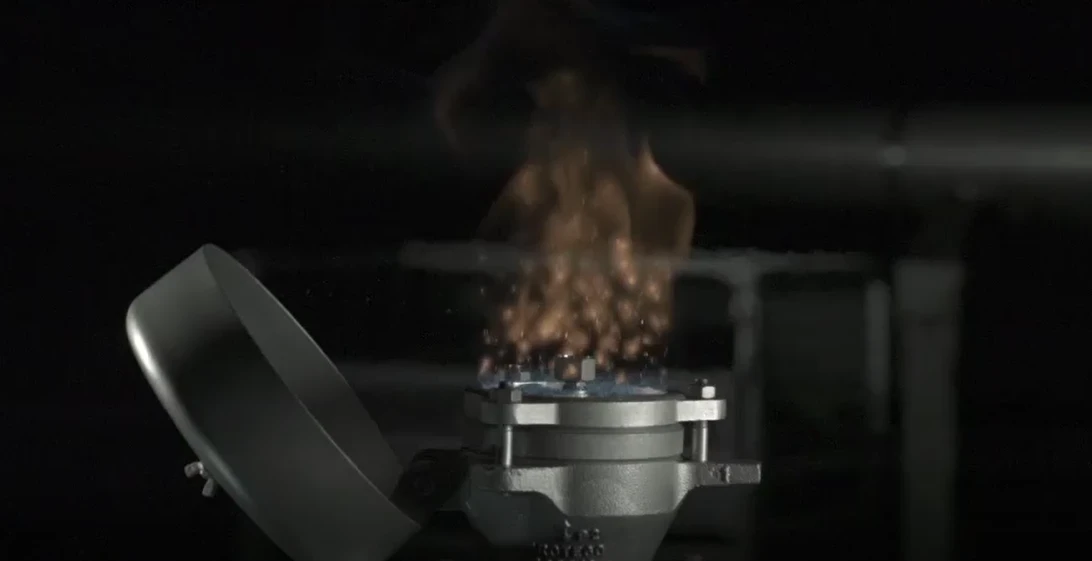
Visible Fire Indication by Tilting Weather Hood
in Case of Fire, the Weather Hood Opens, Allowing the Flame to Be Seen From a Far Distance
Chemically Resistant
Centrally Aligned Melting Element Is Resistant to Chemicals
Endurance Burn Safety
for Alcohols and Hydrocarbons up to Explosion Group IIB
Safety Against Endurance Burning
Protection against Atmospheric Deflagration and Endurance Burning
Spare Parts
Cost-Effective Spare Parts
Modular Design
Allows Replacement and Cleaning of Single FLAMEFILTER®
Function and Description
Protection Against Atmospheric Deflagration and Endurance Burning
The PROTEGO® BE/HR-E End-of-Line
Deflagration Flame Arrester
Apagallamas a prueba de deflagraciones
Flame arrester designed to prevent the transmission of a deflagration. It can be an end-of-line flame arrester or an in-line flame arrester.
was specifically developed for vessels which are not pressurized and store Ethanol or other alcohols with a MESG ≥ 0,85 mm. The combustion of alcohol requires a modified
Flame Arrester
Apagallamas
Device fitted to the opening of an enclosure, or to the connecting pipe work of a system of enclosures, and whose intended function is to allow flow but prevent the transmission of a flame.
Element design to provide protection against
endurance burning
Endurance burning
Stabilized burning for an unlimited time.
. In addition, the
device
Bastidor
A device is a pipe component that influences the media flow by opening, closing, or partially shutting off the flow channel or by dividing or mixing the media flow.
provides protection against atmospheric
deflagration
Deflagration
Explosion propagating at subsonic velocity (EN 1127-1:1997).
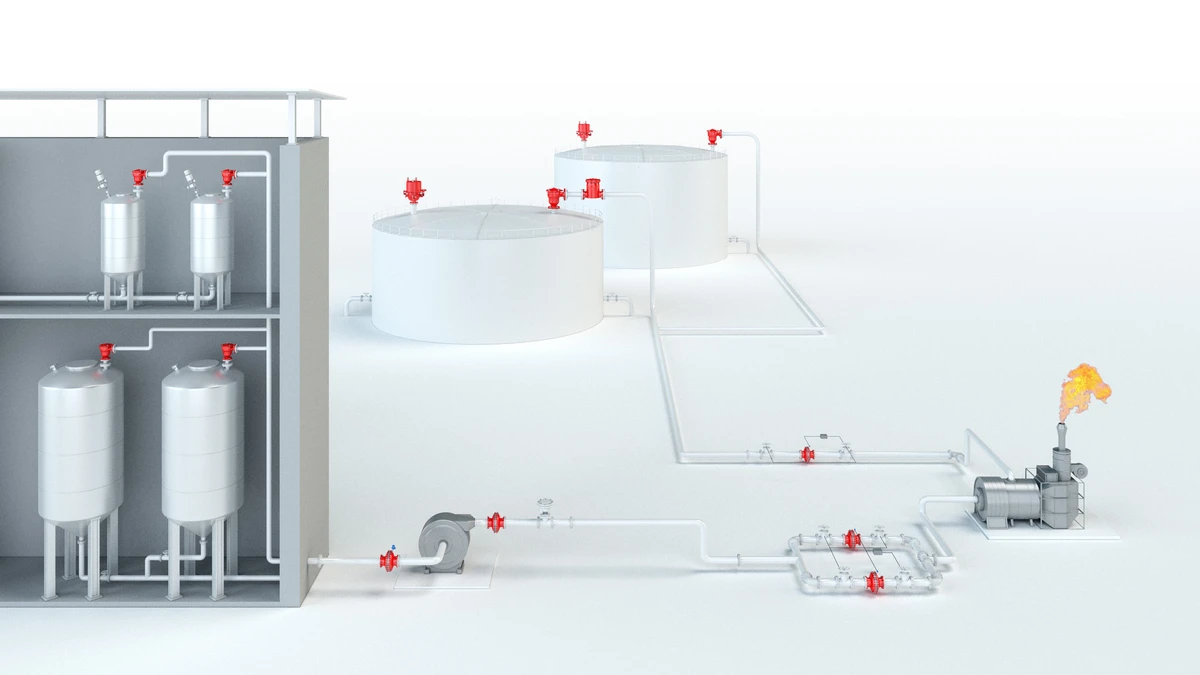
. It is typically installed on in-breathing and out-breathing vent lines to prevent flame transmission into the
vessel
Recipiente
Container or structural envelope in which materials are processed, treated or stored.
or plant caused by endurance burning or atmospheric deflagration.
Main Component – PROTEGO® Flame Arrester Unit
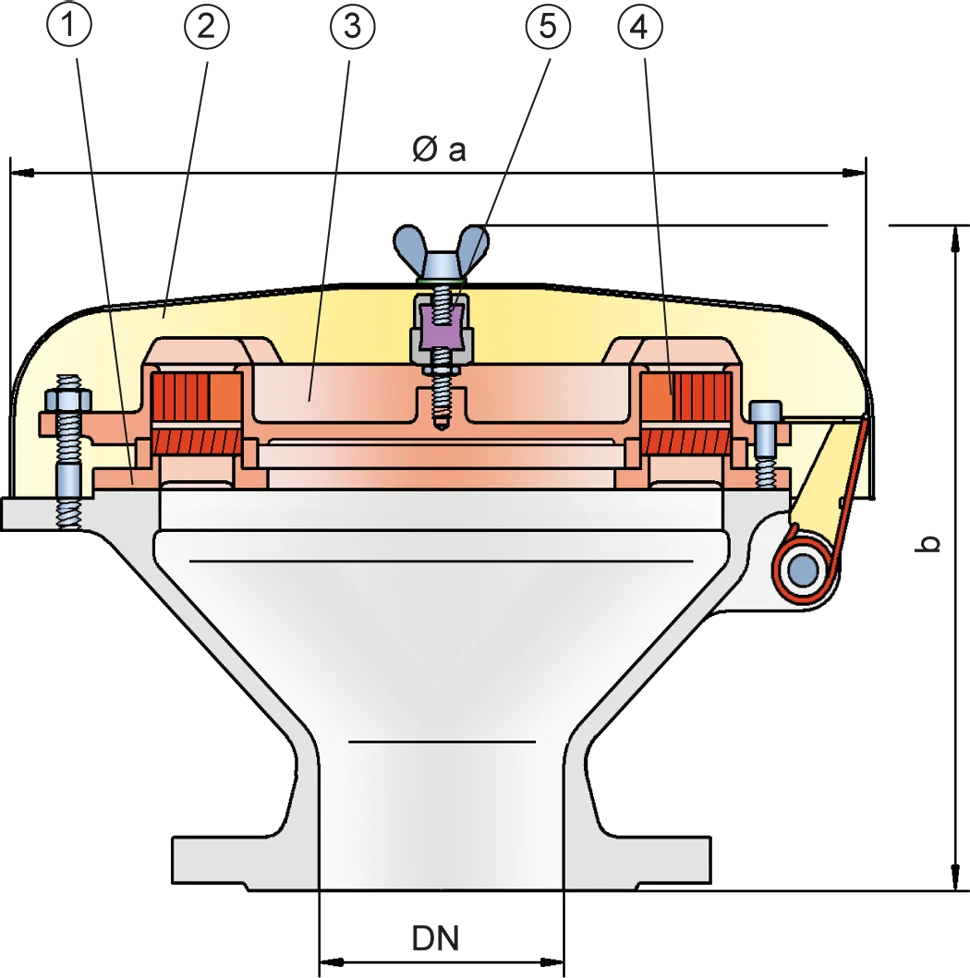
The PROTEGO® BE/HR-E consists of the
housing
Carcasa
A housing is a solid shell, which surrounds a content, either protecting the content from external influences, or protecting the environment from the content.
(1), a
weather hood
Cubierta de protección contra la intemperie
A weather hood is a cover to protect the internal components of a device from environmental influences.
(2), and the PROTEGO® Flame Arrester Unit (3). During normal operation, the metal weather hood is in a closed position. If a flame burns on the Flame Arrester Element surface, the
melting element
Elemento fusible
The melting element is a component that consists of a housing with a lower and upper part.
(5), located in a center position, will melt, and the
spring
Amortiguador
A spring is a spiral of wire which returns to its original shape after it is pressed or pulled.
-loaded weather hood will open. The PROTEGO® Flame Arrester Unit consists of two FLAMEFILTER® discs (4) which are installed in a
FLAMEFILTER® casing
FLAMEFILTER® casing
Enclosure for FLAMEFILTER® including insert rings.
.

For Explosion Group IIB1
The PROTEGO® BE/HR-E End-of-Line Deflagration Flame Arrester is available for alcohols and other substances with a MESG ≥ 0,85 mm.
The standard design can be used for operating temperatures up to +60°C / 140°F.
EU conformity according to the currently valid ATEX directive. Approvals according to other national/international regulations on request.
Product Data
Tabela de dimensões
Para selecionar o diâmetro nominal (DN), veja os diagramas de vazão nas páginas seguintes
| DN | 80 / 3" | 100 / 4" |
| a | 353 | 353 |
| b | 250 | 250 |
Dimensões em mm
Medidas de montagem para a calota de Respiro com camisa de aquecimento sob solicitação
Seleção do grupo de explosão
| MESG | Gr. expl. (IEC / CEN) | Grupo gás (NEC) |
| ≥ 0,85 mm | IIB1 | – |
Aprovações especiais sob solicitação
Seleção do material do corpo
| Execução | B | C |
| Corpo | Aço | Aço inoxidável |
| Tampa | Aço | Aço inoxidável |
| Conjunto abafador de chamas | A | A, B |
Materiais especiais sob solicitação
Combinações de material do conjunto abafador de chamas
| Execução | A | B |
| Armação do FLAMEFILTER® | Aço inoxidável | Aço inoxidável |
| FLAMEFILTER® | Aço inoxidável | Hastelloy |
| Espaçador | Aço inoxidável | Hatelloy |
Materiais especiais sob solicitação
Tipo de conexão flangeada
| EN 1092-1; Form B1 |
| ASME B16.5 CL 150 R.F. |
Outras conexões sob solicitação
Diagrama de vazão
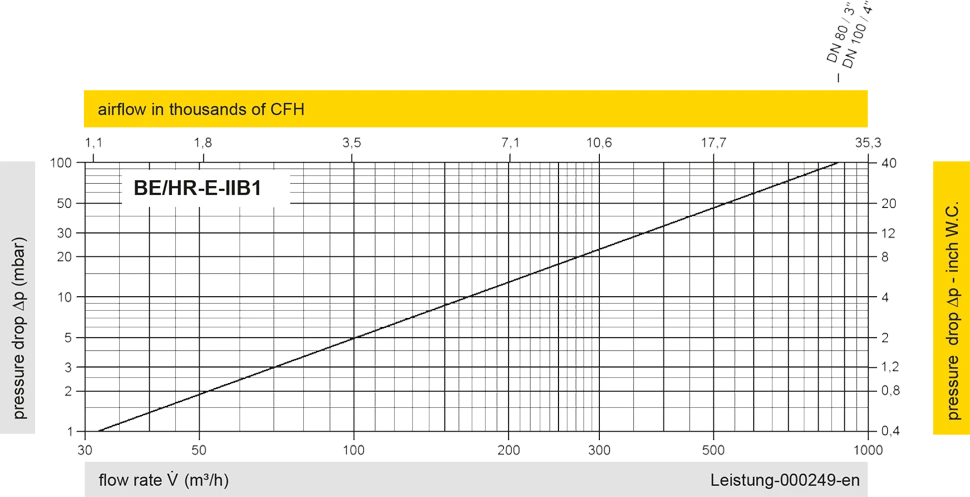
Este diagrama de vazão foi determinado em uma bancada de medição de vazão calibrada e certificada pela TÜV. A vazão V em m³/h se refere ao estado técnico padrão de ar, conforme ISO 6358 (20°C, 1bar). Para conversão em outras densidades e temperaturas, veja o cap. 1: Bases técnicas.
Se você tiver alguma dúvida, comentário ou sugestão, nossa equipe de especialistas terá prazer em ajudá-lo.