Laboratório de Ensaios de Explosão
Na indústria moderna, a segurança dos processos reveste-se de importância fundamental, especialmente quando se lida com substâncias e misturas potencialmente perigosas.
Para minimizar os riscos e garantir a máxima segurança, é essencial conhecer com precisão os parâmetros relacionados à segurança dessas substâncias.


Redução de riscos
Os parâmetros disponíveis na literatura geralmente se baseiam em condições padrão, que podem diferir significativamente das condições do processo e devem ser analisados criticamente do ponto de vista da segurança.
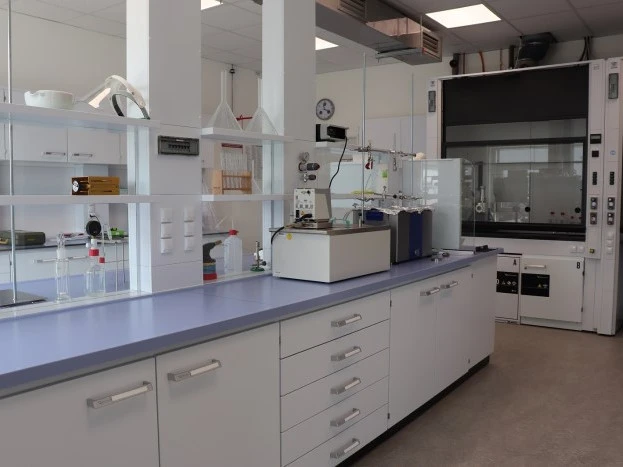
Nosso laboratório de testes PROTEGO® oferece a possibilidade de determinar vários parâmetros em condições não atmosféricas, permitindo identificar a influência das condições específicas do seu processo (pressão, temperatura, agentes oxidantes, gases inertes, etc.).
A investigação da pressão de explosão, dos limites de inflamabilidade, do aumento máximo da pressão de explosão, da concentração limite de oxigênio ou da margem de segurança experimental máxima em condições operacionais realistas fornece dados precisos que contribuem para a minimização de riscos e, simultaneamente, evitam custos decorrentes de um projeto excessivamente complexo.
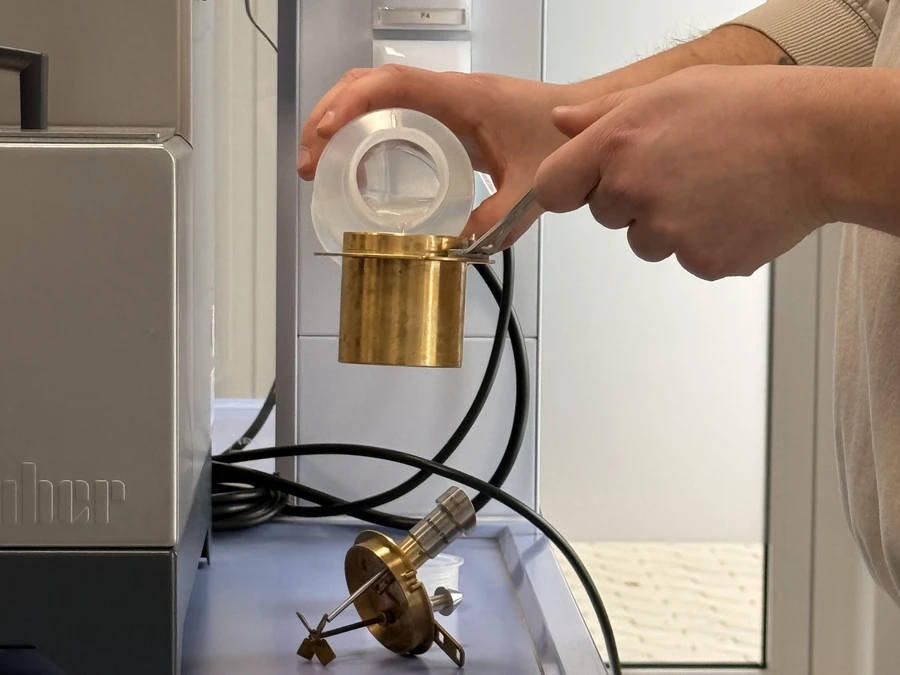
Máximo espaçamento experimental seguro (MESG) (grupo de explosão)
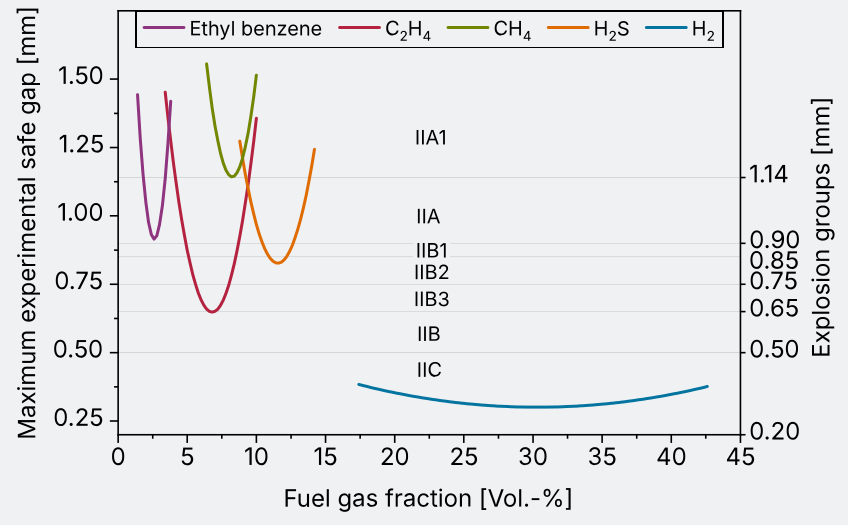
A avaliação da capacidade de penetração de ignição de uma substância é determinada de acordo com a norma EN ISO/IEC 80079-20-1 em um equipamento de medição MESG, e a substância é então classificada em um dos grupos de explosão IIA1, IIA, IIB1, IIB2, IIB3, IIB ou IIC com base nos resultados experimentais.

Quantificando as condições que alteram os grupos de explosão
O grupo de explosão de uma substância é utilizado com o objetivo de avaliar a adequação de corta-chamas ou equipamentos com o tipo de proteção “invólucro à prova de chamas” (Ex d) para a substância em questão. Além de determinar o MESG de substâncias puras, o laboratório de testes PROTEGO® também oferece a possibilidade de quantificar a influência da temperatura, pressão, gases inertes ou agentes oxidantes. As possíveis áreas de aplicação poderiam incluir, por exemplo, a determinação do teor de gás inerte necessário para alterar o grupo de explosão de uma mistura específica de substâncias de IIC para IIA, alcançando assim um projeto de planta mais econômico.

Limite inferior e superior de inflamabilidade
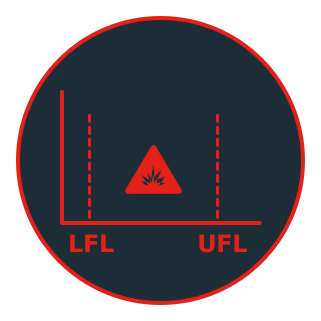
Podem ser aplicadas várias medidas no âmbito da proteção à prova de explosão para evitar a formação de atmosferas potencialmente explosivas dentro de uma instalação. Uma das mais importantes é garantir que os limites de inflamabilidade de uma substância ou mistura não sejam excedidos nem ficam abaixo deles.
Esses parâmetros podem ser determinados à pressão atmosférica, de acordo com a norma EN 1839:2017-04, utilizando o método do tubo ou da bomba; no entanto, para pressões elevadas, apenas o método da bomba, conforme a norma EN 17624:2022, é aplicável. Nesse método, a mistura de combustível e ar é introduzida em uma autoclave de pressão de explosão e acesa por meio de descarga de alta tensão, fio explosivo ou ignição por faísca deslizante.

Medição da pressão dinâmica para segurança na ignição
A medição da pressão dinâmica na parede pode ser utilizada para detectar se o critério de ignição da mistura (aumento de 5% ou 2% da pressão em relação à pressão inicial) é cumprido ou se o valor fica abaixo do limite. A mistura pode ser produzida por meio de um processo de pressão parcial ou pela evaporação completa das correntes líquidas e subsequente homogeneização com a corrente de gás ou ar.
Ao aplicar limites de explosão para garantir o controle seguro do processo, deve-se observar que os parâmetros determinados em laboratório nem sempre são diretamente aplicáveis ao processo. Isso pode ser devido a condições ambientais diferentes, especialmente temperatura e pressão, que podem exercer uma influência crítica sobre esses parâmetros.
Ponto de inflamação
O chamado “ponto de inflamação” pode ser utilizado para avaliar se, ou em que condições ambientais, ocorre uma atmosfera inflamável acima de um líquido. Esse parâmetro de segurança é um dos mais antigos, sendo utilizado como padrão para a avaliação do risco de explosão desde o século XIX.
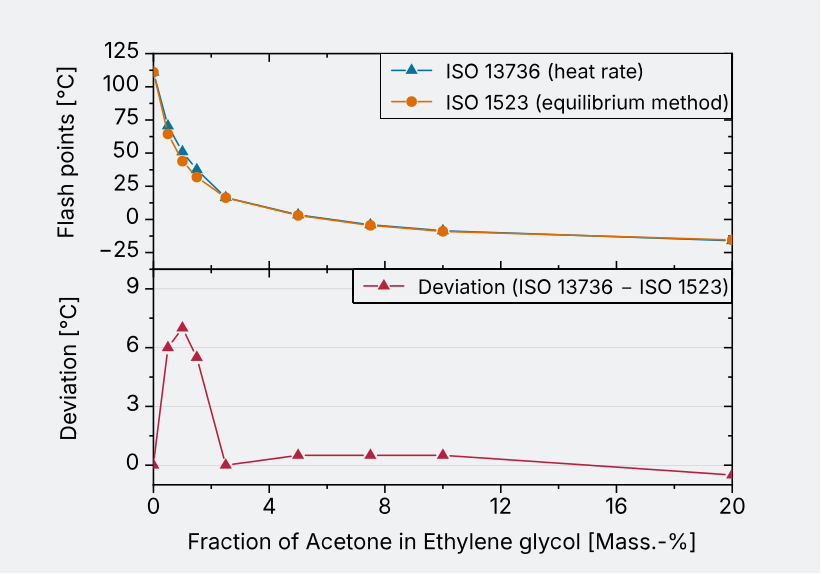
Para determinar o ponto de inflamação, uma amostra líquida de volume definido é aquecida utilizando um gradiente de temperatura constante e testada em intervalos específicos quanto à possibilidade de ignição, utilizando uma fonte de ignição adequada. O tipo de fonte de ignição, o volume e o gradiente de temperatura são definidos pela norma utilizada, o que significa que os valores determinados podem variar dentro de um determinado intervalo.
É importante questionar se a norma utilizada é aplicável à substância ou mistura de substâncias que está sendo testada, a fim de adotar uma abordagem conservadora em relação à segurança. O exemplo de misturas de acetona e etilenoglicol na figura mostra que a ISO 13736 se desvia significativamente para o lado inseguro em comparação com a ISO 1523 para misturas com baixas proporções de componentes de baixo ponto de ebulição ou impurezas.
Concentração limitante de oxigênio
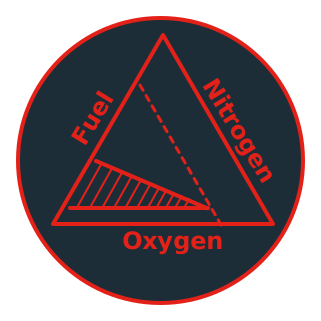
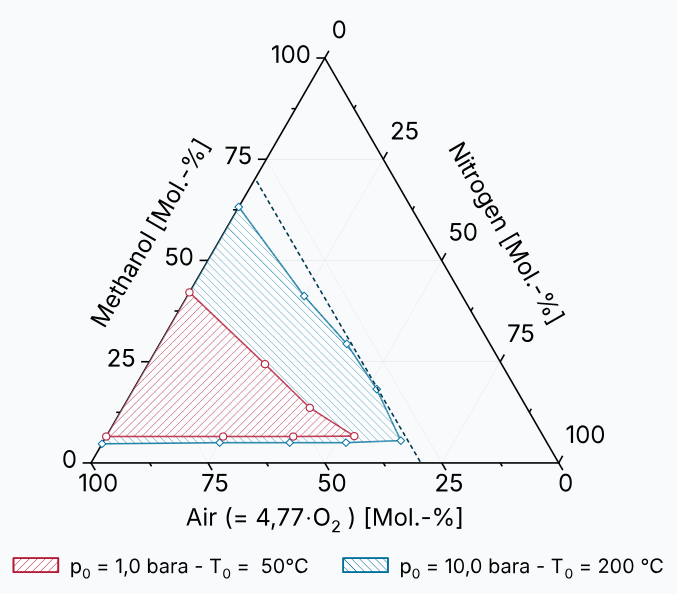
Além dos limites de explosão já mencionados, outro parâmetro importante para a proteção à prova de explosão é a chamada concentração limite de oxigênio. Trata-se da concentração máxima de oxigênio em uma mistura de combustível, gás inerte e ar na qual não pode ocorrer nenhuma explosão.
O LOC pode ser determinado de acordo com a norma EN 1839:2017-04, utilizando o método do tubo ou da bomba, sendo que essa norma se limita a temperaturas de até 200 °C e pressão inicial atmosférica. Se o LOC for determinado a pressões iniciais elevadas, isso só pode ser feito utilizando o método da bomba, em conformidade com a norma EN 17624:2022, que define a determinação dos limites de explosão a pressões de até 100 bar.
Ao contrário da determinação dos limites de explosão, o LOC não apenas varia a proporção de combustível, mas também adiciona um gás inerte. Ao medir diferentes composições na mistura ternária, obtêm-se diagramas triangulares com a respectiva faixa de explosão, conforme mostrado na figura.

Temperatura de ignição
Para avaliar se o aquecimento na superfície de uma máquina elétrica, como uma bomba ou um ventilador, representa um risco de ignição para o meio circundante em atmosferas potencialmente explosivas, é necessário conhecer tanto a temperatura máxima da superfície do equipamento quanto a temperatura de ignição do meio.
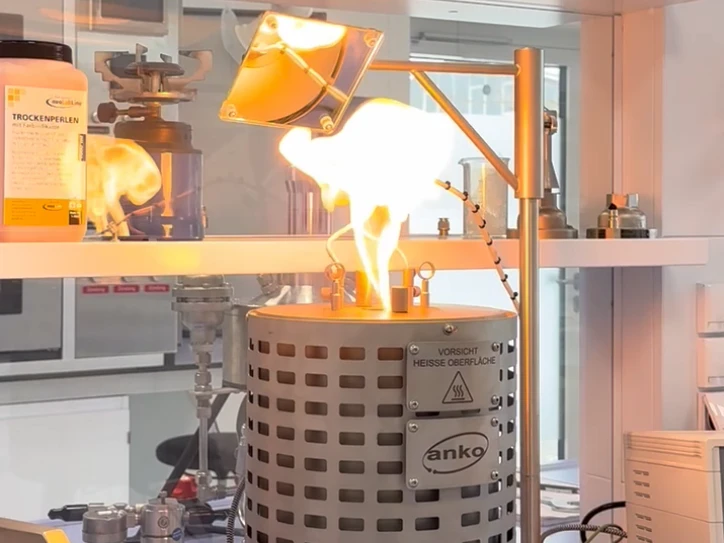
A temperatura de ignição de uma substância é a temperatura na qual ela se inflama espontaneamente sobre uma superfície quente em atmosfera de ar, sem fontes de ignição adicionais, como faíscas elétricas.
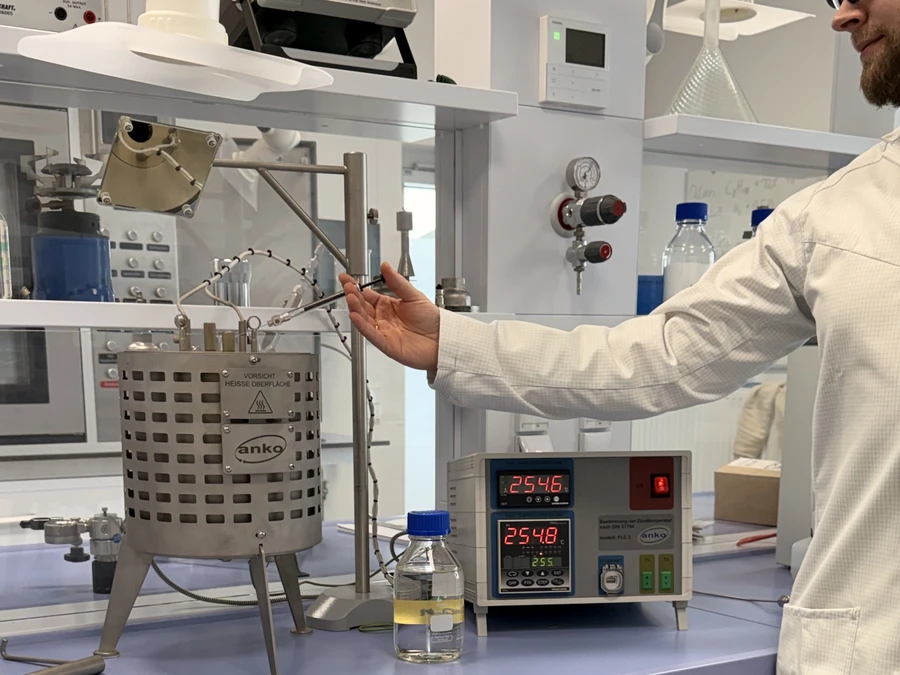
Várias normas podem ser utilizadas para essa determinação, por exemplo, a ISO-IEC 80079-20-1. De acordo com essa norma, a determinação é realizada em um frasco de Erlenmeyer de vidro borossilicato (V = 200 ml), que é aquecido em um forno.
O frasco de Erlenmeyer é aquecido a partir de uma temperatura de 80 °C utilizando um gradiente de temperatura constante, e a amostra é adicionada em volumes definidos e em intervalos definidos. A uma determinada temperatura da superfície do frasco de Erlenmeyer, a amostra inflama-se. A partir desta temperatura, são realizados ensaios a temperaturas sucessivamente mais baixas para determinar se a ignição ainda ocorre, até que seja atingida a temperatura na qual a ignição pode ser descartada com segurança. Com base nesta temperatura, a amostra é classificada numa das classes de temperatura de T1 a T6.

Pressão máxima de explosão e aumento de pressão de gases e vapores
Se as medidas primárias e secundárias de proteção contra explosões, destinadas a prevenir atmosferas potencialmente explosivas e fontes de ignição efetivas, não oferecerem um nível de proteção suficiente para uma aplicação específica, podem ser utilizadas medidas terciárias de proteção contra explosões. Essas medidas limitam os efeitos de uma explosão a um nível seguro por meio de soluções de projeto. Isso pode ser alcançado principalmente por meio de construções resistentes à pressão de explosão (choque), equipamentos de alívio de pressão e sistemas de desacoplamento.
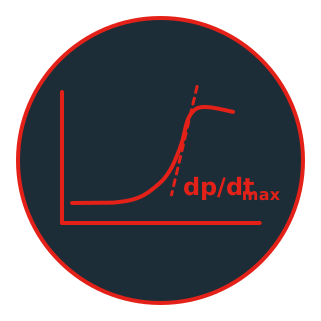
A pressão máxima de explosão (pmax) e a taxa de aumento da pressão (dp/dtmax ou valor KG) estão entre os fatores relevantes para o projeto correto dessas medidas. Esses valores, bem como os limites de explosão e a concentração limite de oxigênio, podem ser determinados em uma autoclave esférica de pressão de explosão, na qual a substância é apresentada na forma gasosa ou vaporosa e levada à explosão.
O gráfico mostra exemplos das curvas de pressão de explosão e suas derivadas primeiras para hidrogênio, etileno e metano no ar. No que diz respeito à pressão de explosão, fica claro que as três substâncias apresentam valores relativamente semelhantes, mas as taxas de aumento de pressão correspondentes são muito diferentes. Observa-se que o hidrogênio possui, de longe, o maior valor KG, que é mais de doze vezes superior ao do metano.
Entre em contato com o Laboratório PROTEGO®