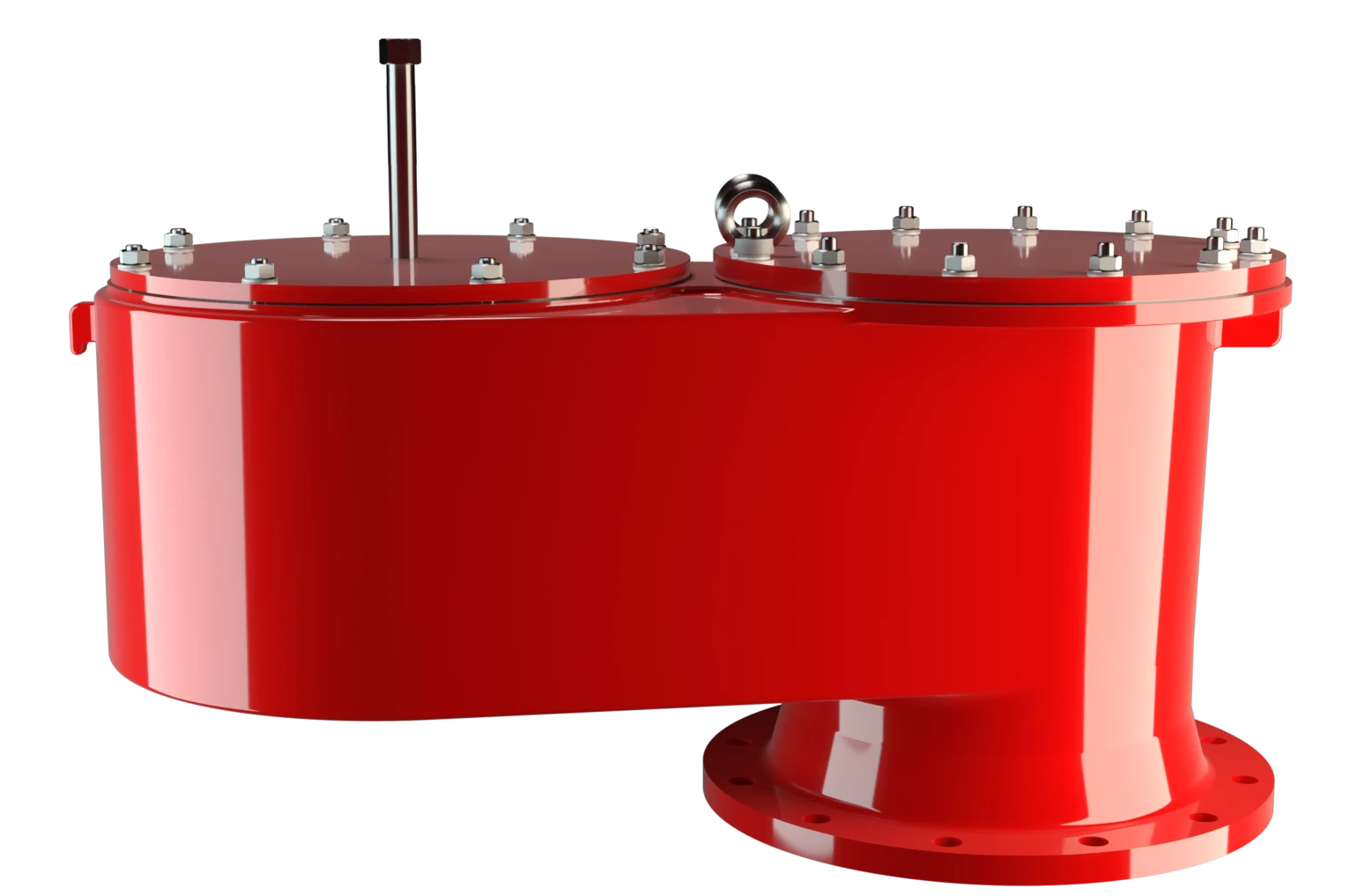
Features
10% Technology
Extreme Tightness
Optimal Pressure Maintenance
Flow Capacity
Guided Valve Pallet
Used in Explosion Hazardous Areas
Condensate Drainage
API Tanks
Highly Developed Vacuum Relief Valve

10% Technology
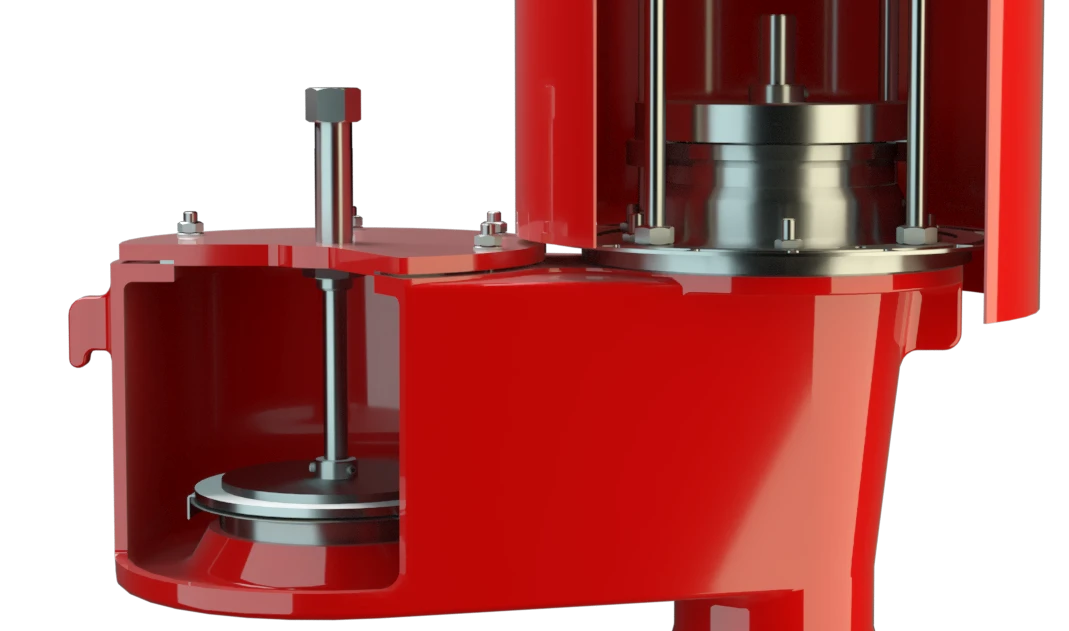
Valve Seats Made of High Quality Stainless Steel
Flow-Optimized Valve Body for Maximum Performance
Dimensions
To select the nominal size Diamètre nominal The nominal size is an alphanumeric designation of size for components in a piping system, used for reference purposes, comprising the letters DN followed by a dimensionless integer that is indirectly related to the physical size of the bore or outside diameter of the connections, expessed in millimeters. (DN), use the flow capacity chart on the following page
| DN | 40 / 1½" | 50 / 2" | 80 / 3" | 100 / 4" | 150 / 6" | 200 / 8" | 250 / 10" | 300 / 12" |
| a | 249* / 9.8* | 249 | 312 | 358 | 443 | 520 | 588 | 588 |
| b | 325* / 12.79* | 337 | 400 | 514 | 713 | 808 | 925 | 925 |
Dimensions in mm / inches
Dimensions for vacuum relief valve with heating jacket upon request
Material selection for housing
| Design | A | B | C |
| Housing | Aluminium | Steel | Stainless Steel |
| Heating jacket (V / SV-H-...) | – | Steel | Stainless Steel |
| Valve seat | Stainless Steel | Stainless Steel | Stainless Steel |
| Sealing | PTFE | PTFE | PTFE |
| Cover | Aluminium | Steel | Stainless Steel |
Option: Housing with ECTFE- lining Revêtement Protective plastic lining with a defined minimum/maximum thickness to protect against aggressive mixtures (e.g., acid).
Special materials upon request
Material selection for vacuum valve pallet
| Design | A | B | C | D | E | F |
| Pressure range [mbar] [inch W.C.] | -2,0 up to -3,5 -0.8 up to -1.4 | <-3,5 up to -14 <-1.4 up to -5.6 | <-14 up to -35 <-5.6 up to -14 | <-14 up to -35 <-5.6up to -14 | <-35 up to -60 <-14 up to -24 | <-35 up to -60 <-14 up to -24 |
| Valve pallet | Aluminium | Stainless Steel | Stainless Steel | Stainless Steel | Stainless Steel | Stainless Steel |
| Sealing | FEP | FEP | Metal to Metal | PTFE | Metal to Metal | PTFE |
Special material as well as higher vacuum upon request
Flange connection type
| EN 1092-1; Form B1 |
| ASME B16.5 CL 150 R.F. |
other types upon request
Flow Capacity Chart
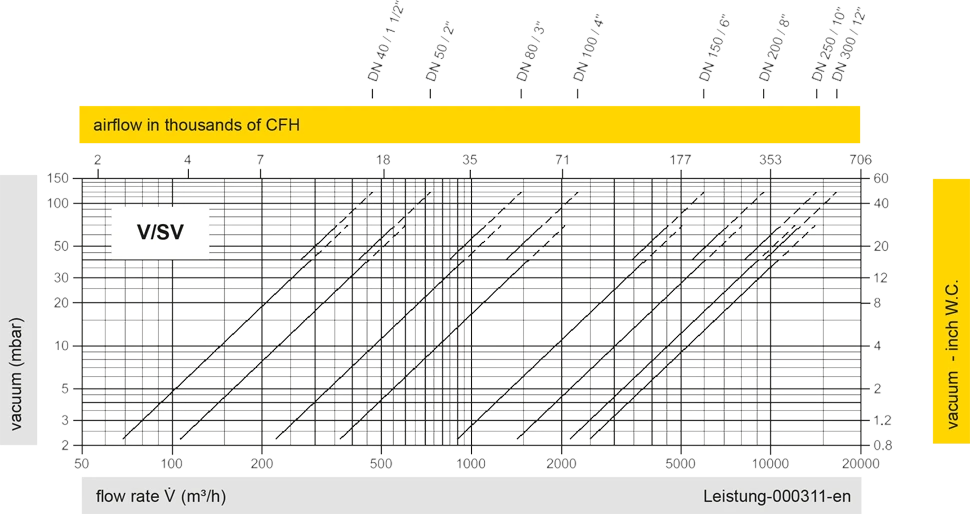
The flow capacity charts have been determined with a calibrated and TÜV certified flow capacity test rig. Volume flow V in (m³/h) and CFH refer to the standard reference conditions of air ISO 6358 (20°C, 1bar). For conversion to other densities and temperatures refer to Sec. 1: “Technical Fundamentals”.
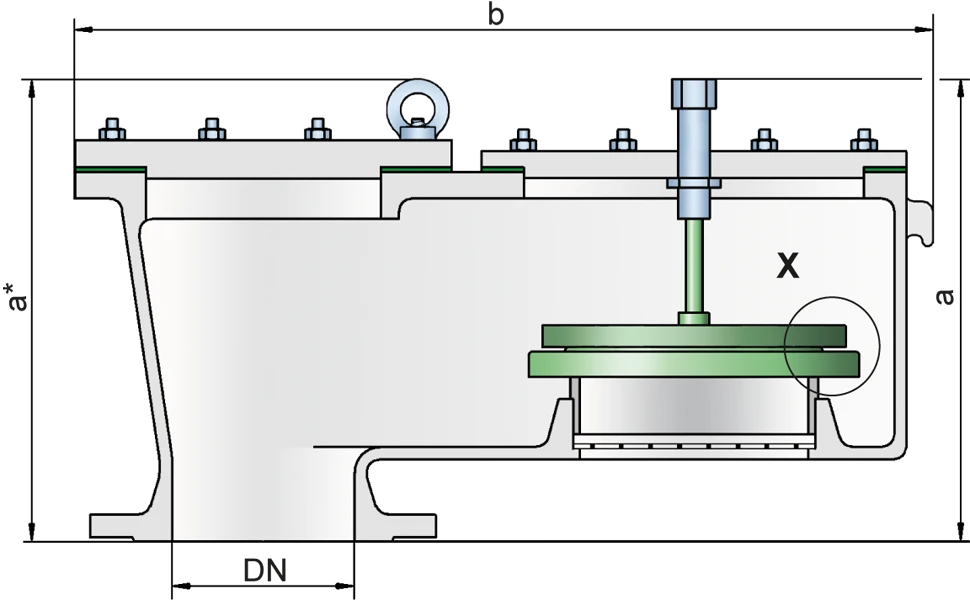

Detail X

Detail X
Si vous avez des questions, des commentaires ou des suggestions, notre équipe d'experts se fera un plaisir de vous aider.