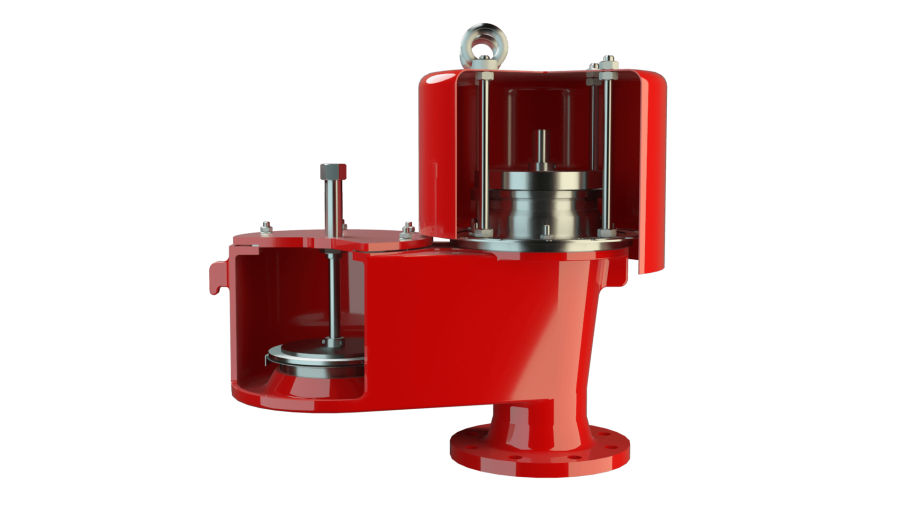
Valve pallet is the generic term for the assembly that rests on the valve seat. The valve pallet separates two different pressure ranges. If there is a pressure increase in the system so that the set pressure is reached or exceeded, the valve pallet begins to open. It lifts from the valve seat.
This opens a cross-section through which a flow takes place, which leads to pressure equalization in the system. If the pressure in the system drops again, the valve pallet Valve pallet Valve pallet is the generic term for the assembly that rests on the valve seat. lowers back onto the valve seat Valve seat The valve seat is a component on which the valve pallet rests when the valve is closed. and closes the cross-section again. Valve pallets are available in various designs. For example, they can be classified according to their sealing variant (e.g. metallic sealing, FEP sealing, PTFE sealing, etc.), according to the type of guide (e.g. spindle guide, pipe guide, wing guide, etc.) and according to their opening behavior (full- lift Lift Lift is the actual travel of the valve pallet from the main valve out of the closed position. valve pallet, proportional valve pallet, etc.). Within a pressure and vacuum relief valve Pressure and vacuum relief valve A pressure and vacuum relief valve is a pressure equalization valve for impermissible pressure and vacuum in a closed system. , the valve pallets are divided into pressure relief valve Pressure-relief valve Valve designed to open and relieve excess pressure and to reclose and prevent the further flow of fluid after normal conditions have been restored. pallets and vacuum relief valve Vacuum relief valve A vacuum relief valve is used to ventilate a part of the system and protects it from impermissible underpressure. pallets according to their place of use (inflow or outflow side).